Understanding China’s Semi-Trailer & Trailer Market: A Strategic Guide for International Buyers
For businesses involved in international logistics, heavy equipment procurement, or fleet management, navigating the terminology of the Chinese trailer market is crucial. Based on China’s national standard GB1589, trailers are categorized into three primary types: Full Trailers, Semi-Trailers, and Center-Axle Trailers.
This guide clarifies the technical differences and operational advantages of each to help you make informed purchasing decisions.
1. The Semi-Trailer (The Industry Standard)
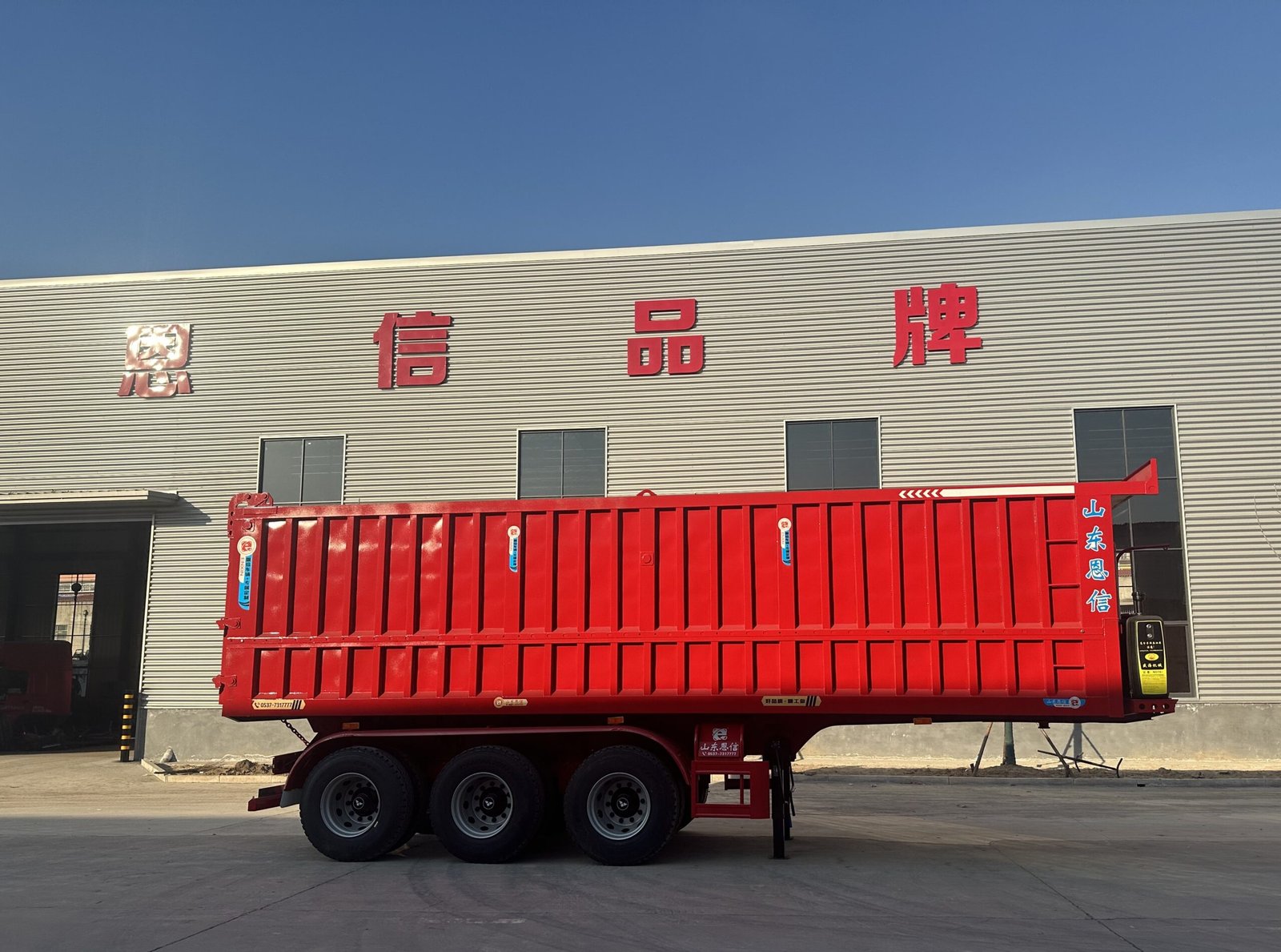
The Semi-Trailer is the backbone of global long-haul logistics and the most exported trailer type from China.
- Mechanical Design: It has no front axle. The front portion of the trailer rests on the fifth wheel (kingpin) of the tractor unit. The tractor carries a significant portion of the trailer’s weight.
- Operational Strength: High stability at high speeds and excellent braking performance.
- Best Use Case: Long-distance freight, container shipping (skeleton trailers), and heavy-duty liquid transport.
- Pro Tip: In China, semi-trailers are the preferred choice for “Drop-and-Hook” logistics, significantly increasing fleet utilization rates.
2. The Full Trailer (The Local Specialist)
While once common globally, the role of the Full Trailer has evolved into a niche specialist in the modern era.
- Mechanical Design: It features axles at both the front and rear, allowing it to support its entire load independently. It connects to the lead vehicle via a simple tow bar/hitch.
- The Advantage: The towing vehicle (truck) does not carry any of the trailer’s weight; it only provides the pulling force.
- Current Limitations: Due to stability issues (swaying) at high speeds, they are generally restricted from highways in China.
- Best Use Case: Short-distance transfers within sea ports, factories, warehouses, or for agricultural use.
3. The Center-Axle Trailer (The Efficiency Modernizer)
The Center-Axle Trailer is the “middle ground” between a full and semi-trailer and is currently seeing a massive surge in the Chinese market.
- Mechanical Design: The axles are positioned near the center of gravity of the trailer. Unlike a full trailer, the drawbar is rigid and transmits a small vertical load (usually <10%) to the towing vehicle.
- The “Car Carrier” Revolution: Under China’s latest regulations, center-axle trailers are the primary choice for vehicle transporters (Car Carriers) because they allow for a longer total vehicle length (up to 22 meters) compared to standard semi-trailers.
- Best Use Case: E-commerce express delivery (high volume, low weight) and specialized automobile logistics.
Comparison Summary for Fleet Managers
| Feature | Semi-Trailer | Full Trailer | Center-Axle Trailer |
| Weight Distribution | Shared with Tractor | Self-Sustaining | Mostly Self-Sustaining |
| High-Speed Stability | Excellent | Poor | Good |
| Maneuverability | High | Medium (Difficult to reverse) | High |
| Typical Length (CN) | 13.75m – 17.5m | Varies | Up to 22m (Total Train) |
Key Takeaways for International Buyers
- Regulatory Compliance: Always check your local road regulations. A 22-meter center-axle train might be legal in China but may exceed length limits in some European or Southeast Asian markets.
- Efficiency Gains: If your business involves high-frequency logistics, Semi-Trailers offer the best ROI due to their compatibility with most tractor units and superior safety profiles.
- Customization: Chinese manufacturers (like CIMC and others) are highly adept at customizing these trailers with lightweight aluminum or high-strength steel to maximize your payload.